Tablets have quietly become the most practical computing device for a large number of Indian students, creators, and casual users. Not a phone — too small for focused work. Not a laptop — too expensive, too heavy, too much. A good tablet sits in the exact middle: big enough to edit, sketch, read, and watch on; light enough to carry to class or a café; affordable enough to not require a three-month budget justification.
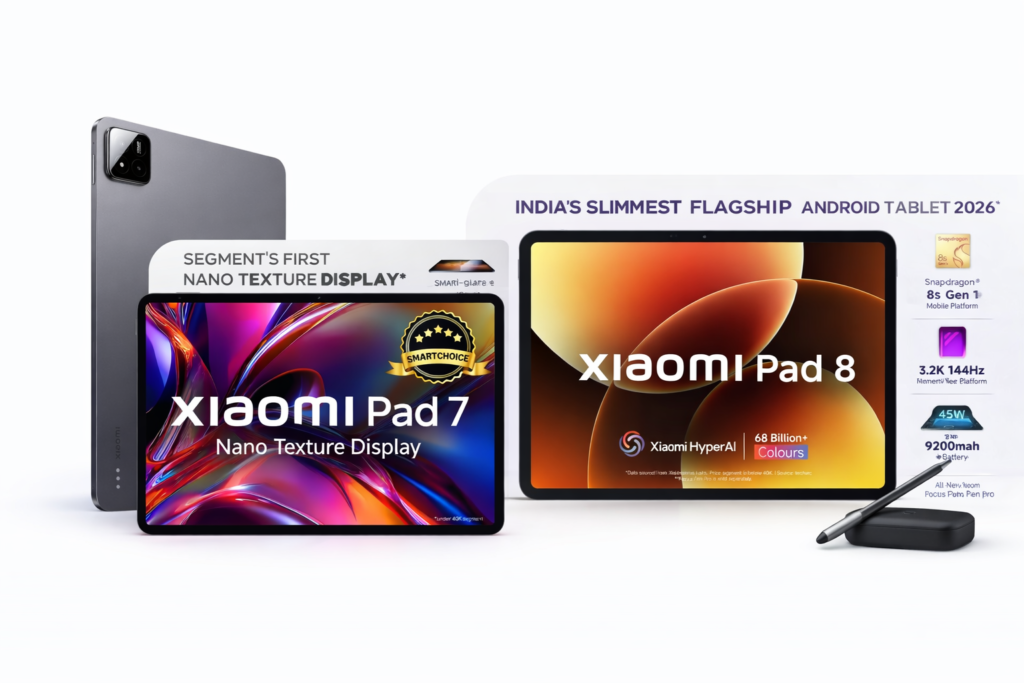
Xiaomi has understood this positioning better than most Android manufacturers and has built its Pad lineup accordingly. The result in 2026 is a genuinely interesting problem: two strong tablets from the same brand, launched months apart, targeting broadly the same audience. The Xiaomi Pad 7 is already available in India starting at ₹26,999 and has had time to settle into its identity. The Xiaomi Pad 8 just launched on March 10, 2026, bringing a significant chipset upgrade and starting at ₹33,999.
The question is not which one is better — the Pad 8 is better, obviously. The question is whether the difference is worth the price gap to you, specifically. That is what this guide answers.
What Are These Tablets?
The Xiaomi Pad 7 launched in India in January 2025 and remains a current, actively-sold product. It runs the Snapdragon 7+ Gen 3, carries an 11.2-inch 3.2K 144Hz display, and starts at ₹26,999 for the 8GB + 128GB variant — with the 12GB + 256GB version sitting at ₹29,999. It is a mature, well-reviewed mid-range tablet with a proven software experience on HyperOS 2.
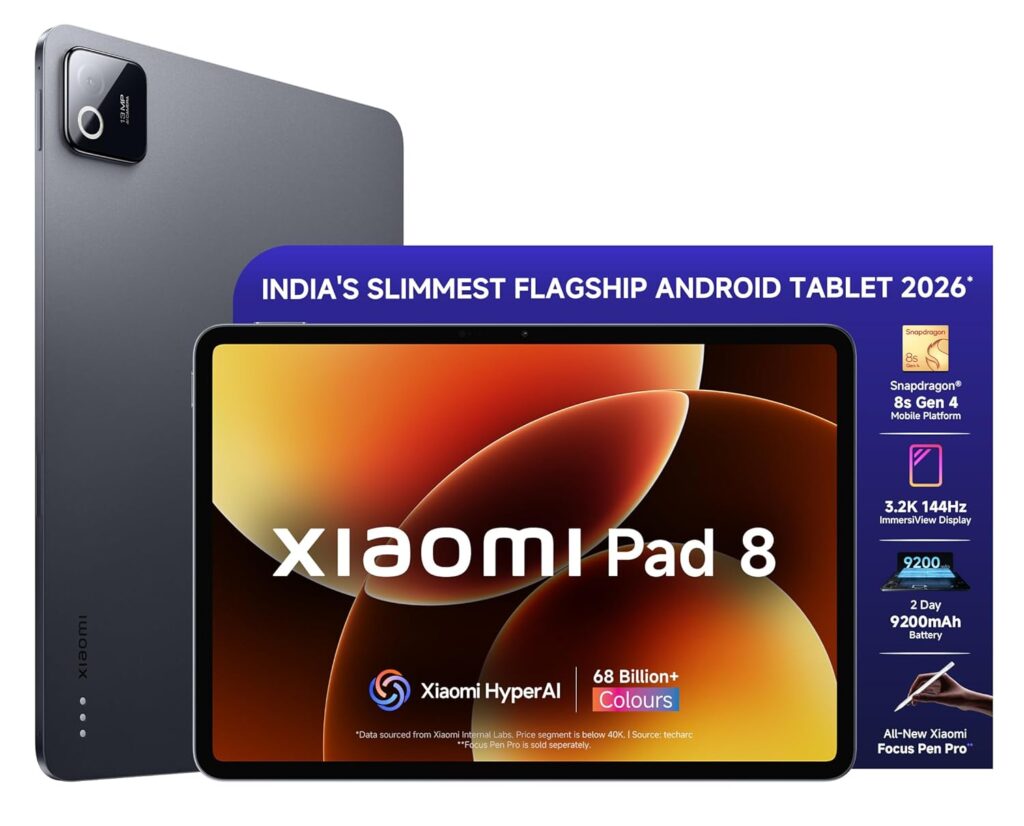
The Xiaomi Pad 8 is the newer generation, launched globally at MWC 2026 and in India on March 10. It brings the Snapdragon 8s Gen 4 — a full tier up from the Pad 7’s chipset — along with a 9,200mAh battery, Wi-Fi 7, Android 16 via HyperOS 3, and the new Focus Pen Pro stylus support. It starts at ₹33,999 for the 8GB + 128GB variant, with the 12GB + 256GB variant at ₹36,999.
Xiaomi Pad 7 vs Pad 8 — Specs Comparison
| Spec | Xiaomi Pad 7 | Xiaomi Pad 8 |
|---|---|---|
| Processor | Snapdragon 7+ Gen 3 | Snapdragon 8s Gen 4 |
| Display | 11.2-inch, 3.2K, 144Hz LCD | 11.2-inch, 3.2K, 144Hz LCD |
| RAM / Storage | Up to 12GB / 256GB (UFS 3.1) | Up to 12GB LPDDR5T / 256GB (UFS 4.1) |
| Battery | 8,850mAh, 45W charging | 9,200mAh, 45W charging (67W charger in box) |
| OS | HyperOS 2 (Android 15) | HyperOS 3 (Android 16) |
| Wi-Fi | Wi-Fi 6E | Wi-Fi 7 |
| Stylus Support | Focus Pen (sold separately) | Focus Pen Pro — 16,000+ pressure levels, rotation support |
| Starting Price (India) | ₹26,999 | ₹33,999 (effective ~₹30,999 with SBI offer) |
| Buy | [Check Price on Amazon] | [Check Price on Amazon] |
Where the Pad 8 Actually Pulls Ahead
Processor — The Biggest Upgrade
This is the gap that matters most. The Snapdragon 8s Gen 4 in the Pad 8 delivers roughly 32% better CPU performance and over 50% stronger GPU output compared to the Snapdragon 7+ Gen 3 in the Pad 7, according to Xiaomi’s own benchmarks. In practical terms: the Pad 7 handles everything a student or casual creator needs without breaking a sweat. The Pad 8 handles everything faster, with more headroom for demanding tasks — video editing, heavy multitasking, gaming at higher settings.
If your tablet use is primarily video playback, note-taking, reading, and light app use, the Pad 7’s processor is not a bottleneck. If you edit videos, run multiple apps simultaneously, or play demanding games, the Pad 8’s chipset is a meaningful real-world difference, not just a spec sheet upgrade.
Storage — UFS 4.1 vs UFS 3.1
The Pad 8’s UFS 4.1 storage paired with LPDDR5T RAM results in noticeably faster app load times and file handling compared to the Pad 7’s UFS 3.1 with standard LPDDR5X. For creators working with large video files or high-resolution images on the device, this matters. For students and general users, the difference is less critical but still perceptible in day-to-day use.
Battery and Software
The Pad 8 carries a 9,200mAh battery — larger than the Pad 7’s 8,850mAh, and Xiaomi includes a 67W charger in the box despite the 45W charging spec — a welcome addition that was missing from the Pad 7’s retail packaging. The Pad 8 runs HyperOS 3, based on Android 16, with a new Workstation Mode that brings PC-level browser support — right-click menus, hover previews, and a multitasking layout that genuinely makes the tablet feel closer to a laptop replacement than any previous Xiaomi tablet software did.
The Focus Pen Pro
The optional Focus Pen Pro at ₹5,999 supports 16,000+ pressure levels and under 1ms latency, and is the first Android stylus with rotation support. For sketch artists, designers, and students who take handwritten notes, this is a significant leap over the previous Focus Pen that worked with the Pad 7. The Pad 7’s stylus support is functional. The Pad 8’s is genuinely creative-grade.
Where the Pad 7 Still Makes Complete Sense
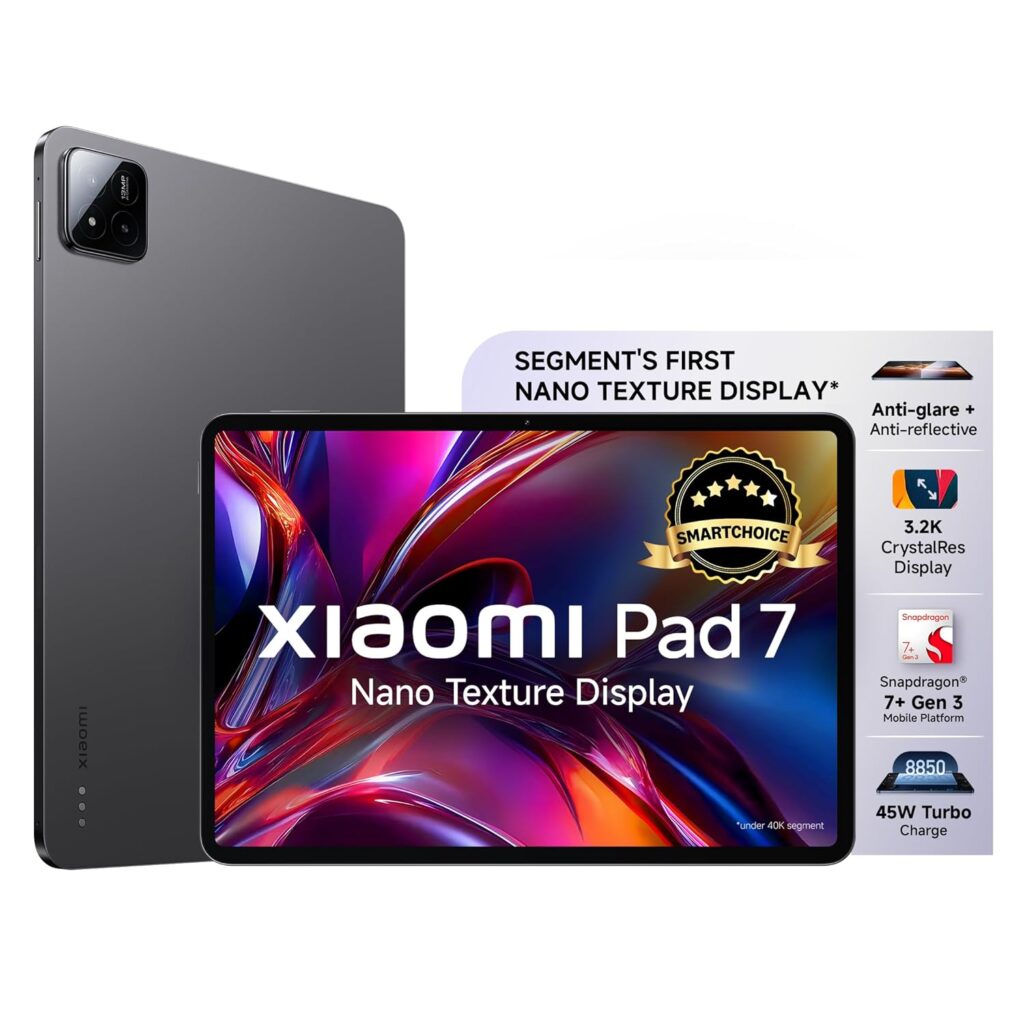
The Pad 7 is not outdated. It is a well-specced, well-reviewed tablet that launched at competitive pricing and has since come down further at times of sale. The 11.2-inch 3.2K 144Hz display with Dolby Vision, 8,850mAh battery with 45W charging, and Snapdragon 7+ Gen 3 is a combination that comfortably handles everything most students and casual users do on a tablet every day.
The real argument for the Pad 7 is financial. The 8GB + 128GB variant at ₹26,999 and the 12GB + 256GB at ₹29,999 positions it roughly ₹7,000 below the equivalent Pad 8 configuration. That gap buys you a decent pair of earbuds, a keyboard cover, or a meaningful portion of a stylus. If you are a student buying your first proper tablet and the Pad 8 requires stretching a budget that does not have that elasticity, the Pad 7 will not disappoint you.
Who Should Buy the Xiaomi Pad 7?
- Students managing a tight budget who need a reliable large-screen device for notes, research, and online classes
- Entertainment users who primarily stream, read, and browse — tasks where the Pad 7’s display and battery are more than sufficient
- First-time tablet buyers transitioning from using a phone for everything — the Pad 7 is a dramatic upgrade regardless of the Pad 8’s existence
- Anyone who finds the Pad 7 at a significant discount during sales — at ₹24,000 or below, the value case becomes very strong
Who Should Buy the Xiaomi Pad 8?
- Creators and editors who work with video or photo files directly on the tablet and need fast storage and processing
- Students who annotate heavily and want to use the Focus Pen Pro for serious note-taking with pressure sensitivity
- Multitaskers who run multiple apps simultaneously and want the Workstation Mode and faster chipset for that workflow
- Long-term buyers who want the most recent chipset and four years of Android OS updates and six years of security updates from launch
- Anyone who can take advantage of the SBI bank offer — at the effective ₹30,999 price with the offer valid till March 31, 2026, the gap versus the Pad 7’s 12GB variant narrows significantly
Alternatives Worth Considering
Realme Pad 3 (expected ~₹18,000–₹22,000): Realme has been teasing its Pad 3 alongside upcoming launches in 2026. For a buyer whose budget stops below ₹25,000, this is worth tracking. Realme’s tablets have historically delivered reasonable specs for the price, though they have not matched Xiaomi’s display quality or software support at equivalent price points.
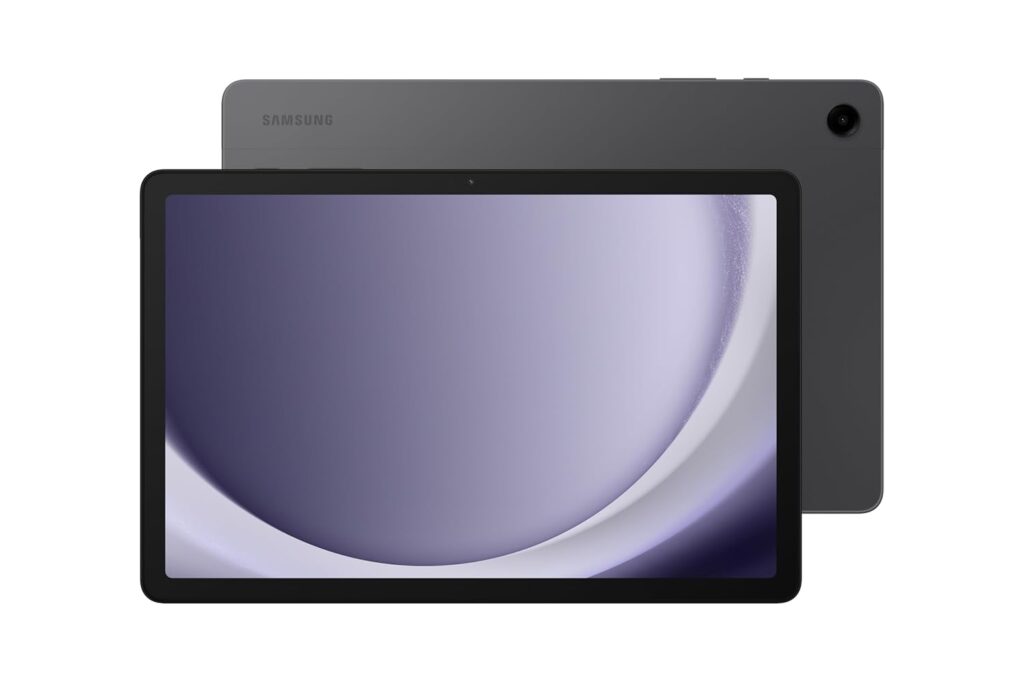
Samsung Galaxy Tab A9+ (approx. ₹22,999): A strong alternative for users who prioritise ecosystem — Samsung DeX mode, S Pen compatibility on select variants, and Samsung’s longer software update commitment. The display and chipset do not match the Pad 7 at a similar price, but Samsung’s brand support and resale value in India are meaningfully better.
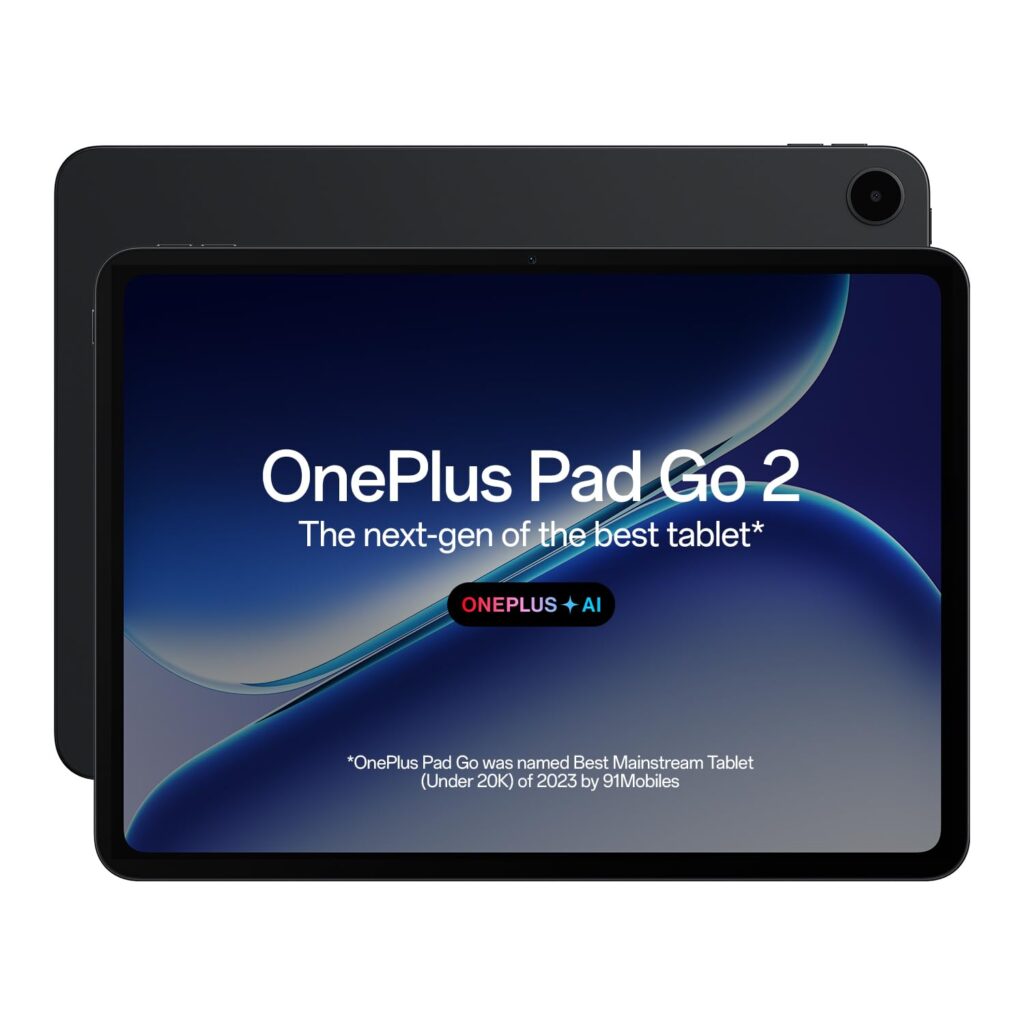
OnePlus Pad Go 2 (approx. ₹27,000): A well-reviewed mid-range option that competes with the Pad 7 in the sub-₹25,000 space. Strong display, clean OxygenOS, and good battery life. Worth considering if you are already in the OnePlus ecosystem and prefer OxygenOS to HyperOS.
Final Verdict — Which One Should You Buy?
The Xiaomi Pad 8 is the better tablet. That part is straightforward. The Snapdragon 8s Gen 4, UFS 4.1 storage, HyperOS 3 with Workstation Mode, and the Focus Pen Pro support make it the more capable and more future-proof device across every measurable specification.
The Xiaomi Pad 7 is still a very good tablet that will serve students and general users well for years. The display is excellent. The battery is large. The software is capable. If the ₹7,000 difference matters to your budget — and for many Indian buyers it genuinely does — the Pad 7 is not a compromise, it is a considered choice.
If you can take advantage of the SBI offer on the Pad 8 before March 31, 2026, the effective price gap narrows enough that the Pad 8 becomes the obvious recommendation for almost everyone. If you are buying after that offer expires at full ₹33,999, weigh the chipset and software advantages against what that ₹7,000 difference could buy you in accessories or savings.
Either way, you are buying a good tablet. The only question is which version of good fits your situation.
[Check Price — Xiaomi Pad 7 on Amazon]
[Check Price — Xiaomi Pad 8 on Amazon]
Both tablets are available on Amazon India and Xiaomi’s official website. If your budget allows, check whether the SBI bank offer is still active before you complete the purchase — it makes the Pad 8 a significantly more compelling proposition.